Whether you're standing at a store display or zooming into a product photo on your phone, a date package's label is the most honest source of information for judging what you're about to buy. Unfortunately, many buyers only glance at the price and brand without reading the important details that actually determine a product's freshness, quality, and safety. As a date store that wants its buyers to shop smart, we put together this guide to reading date package labels — from net weight and expiry date to origin and halal markings — so you can decide with confidence before paying.
Why Reading the Label Matters
A label is not a mere formality. Packaged food products are required to display certain information to protect consumers: net weight, expiry date, and the producer's or importer's name and address. For date buyers, the label is the way to verify that the dates are still fit to eat, to know how much you're actually paying for, and to confirm the product comes from a responsible party. Getting into the habit of reading labels spares you unpleasant surprises like dates that turn out to be near expiry or a net weight smaller than expected.
Seven Pieces of Information You Must Check on the Label
| Information | What It Means | Why It Matters to Buyers |
|---|---|---|
| Net weight | Weight of contents without packaging | Determines the real value you're paying for |
| Expiry / best before date | Limit of the product's best quality | Ensures freshness and safety |
| Producer/importer name & address | The responsible party | Proof the product has a clear source |
| Ingredient list / composition | Contents (dates only or with additions) | Assess whether sugar/preservatives are added |
| Country of origin / variety | Where the dates come from | Helps judge price and quality fit |
| Halal logo/marking | Halal certification status | Important for Muslim consumers |
| Production/batch code | Production identity | Useful for tracing if a problem arises |
1. Net Weight
Net weight is the weight of the product's contents without packaging, stated in units like grams or kilograms. This differs from gross weight, which includes the packaging. When comparing two products, use net weight to compute the price per 100 grams for a fair comparison. Beware large packs whose net weight turns out small.
2. Expiry or Best Before Date
Packaged products are required to show the day, month, and year of expiry. You may find markings like "Best Before," "Use By," or "Expired Date." For products with a shelf life over three months, the date format is often written as day-month-year. Make a habit of choosing the product with the furthest date so the consumption window is longer. For wet dates with a shorter life, this date is even more important.
3. Producer or Importer Name and Address
A food producer or importer is required to list a name and address on the label. For buyers, this is proof the product comes from an accountable party, not just a plain package without identity. Imported products usually list a local importer responsible for distribution in Indonesia.
4. Ingredient List or Composition
For pure whole dates, the composition ideally names only "dates." For processed products like stuffed dates or chocolate dates, the ingredient list will be longer and include fillings, chocolate, and possibly sugar or preservatives. If you prioritize a simple composition, check this section and look for a "no added sugar" note where available.
5. Country of Origin or Variety
Many packages state the country of origin (for example Saudi Arabia, Tunisia, Palestine, Iran) and/or the variety name. This helps you judge whether the price is appropriate. For instance, Ajwa comes from Madinah and is premium, so a price that's too cheap warrants suspicion. An honest seller or package will name the origin and variety specifically.
6. Halal Logo or Marking
For Muslim consumers, a halal marking is an important consideration. In Indonesia, halal certification is managed through an official system, and many products display a halal logo on the package. Check for this marking as part of your purchase decision.
7. Production or Batch Code
A production code helps producers and consumers trace a product if a quality issue arises. Although you may not need it day to day, the presence of this code signals the product is managed with good governance.
Distinguishing Brand Name, Variety, and Grade on the Package
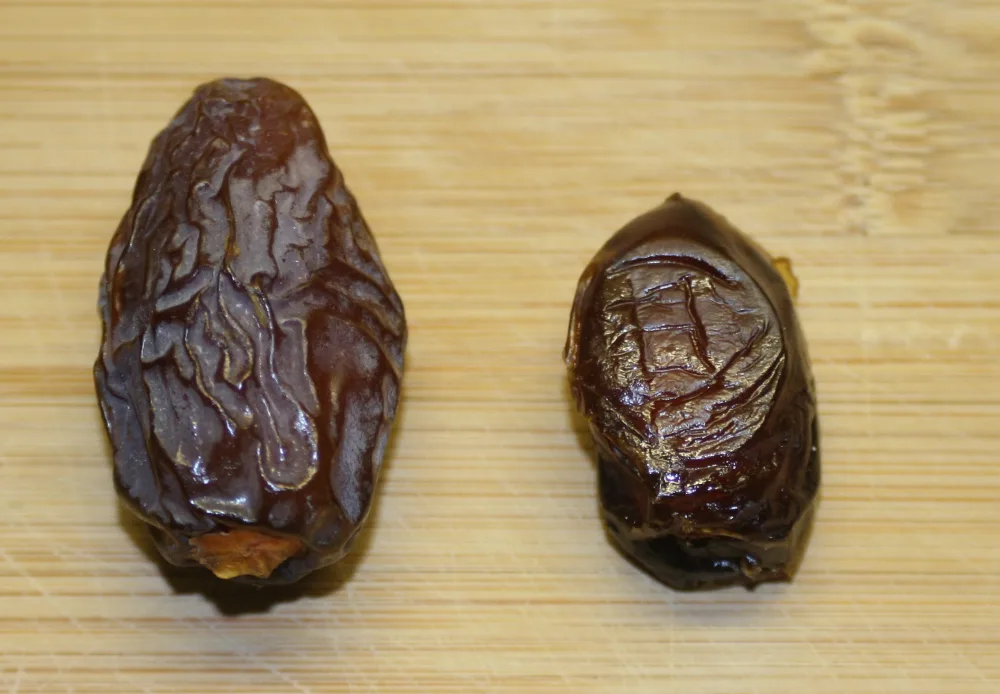
One common confusion is telling apart three things often printed close together: the brand name (the seller's identity), the variety (the type of date like Sukari or Medjool), and the grade (the quality/size tier like AAA or Jumbo). All three are different. A brand can sell many varieties, and one variety can come in several grades. When reading a package, identify all three so you know exactly what you're buying: for example "Medjool" (variety) "Jumbo" (grade) from a particular brand. Understanding this prevents you from paying a high-grade price for an ordinary-grade product.
Practical Tips for Reading Labels When Shopping Online
When shopping online, you can't hold the package directly, so ask the seller for a clear photo of the label. A label photo showing net weight, best-before date, and composition is a sign of a transparent seller. If a seller is reluctant to show the label or can't answer questions about origin and date, reconsider the purchase. For imported products, it's normal to see an Indonesian-language information sticker applied by the importer; this is actually a sign the product entered through the proper channel.
Labels on Bulk Dates vs Packaged Dates
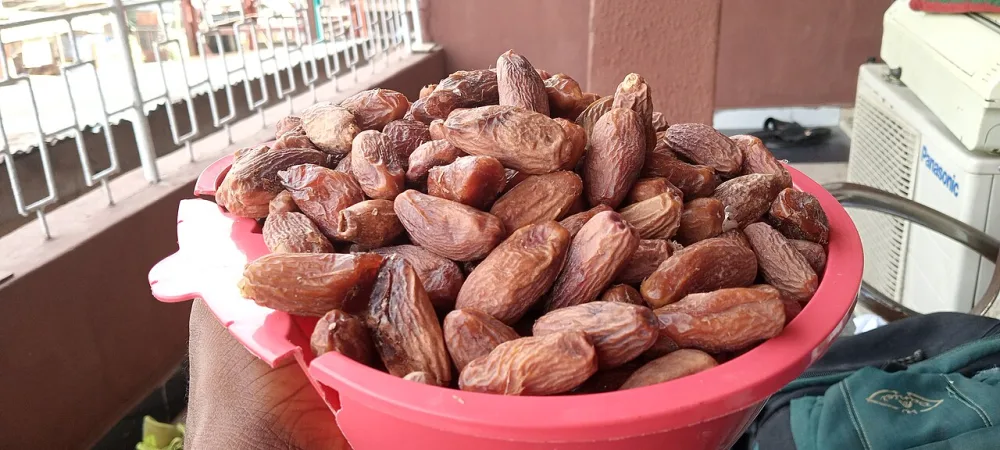
Not all dates are sold in sealed packages with a full label. In many stores, dates are also sold in bulk by the kilo from a large carton, weighed on request. With bulk dates, label information usually isn't attached to the portion you buy, so you need to be more proactive in asking the seller: which variety, which country of origin, when stock arrived, and whether there's a halal marking from the source. The advantage of bulk dates is that you can see and sometimes smell the condition of the dates directly, and buy exactly the amount you want. The downside is you lose the written assurances found on a sealed package. So buying bulk dates is safest at a trusted store whose seller understands the product and answers questions honestly.
Conversely, factory-sealed packaged dates give you all the label information in writing, but you can't inspect them physically before opening. Many buyers choose a combination: packaged dates for gifts and information assurance, bulk dates for daily consumption at an often more economical price. Whatever the choice, the principle is the same — make sure you know the variety, origin, freshness, and price fairness before paying.
Common Mistakes When Reading (or Not Reading) Labels
A few errors that frequently happen and are best avoided: first, looking only at price without comparing net weight, so you're fooled by a large pack containing little. Second, ignoring the best-before date, especially on wet dates with a short life. Third, assuming "pitted" automatically means "no added sugar," when the two are different. Fourth, not distinguishing grade, so you pay a high-grade price for an ordinary product. Fifth, being tempted by exaggerated claims without specific facts on the label. By being aware of these mistakes, you automatically become a more critical and protected buyer.
Closing
Reading a date package label is a simple skill that protects you as a buyer. By checking net weight, expiry date, producer identity, composition, origin, halal marking, and production code, you can assess freshness, price fairness, and quality before paying. Understand too the difference between bulk and packaged dates, and avoid common label-reading mistakes. Add the ability to distinguish brand, variety, and grade, and you'll shop for dates with far more confidence — both at a store display and on your phone screen. This information is educational to help your shopping decisions.